A blue-light filter is an optional feature to evaluate separately from your prescription. Before paying for it, decide what you want to change: the colour of the image, a viewing preference, or a symptom you hope the filter will solve. Those are different reasons to buy, and the same checkbox cannot establish an answer to all three.
For a first pair of VR inserts, get the device match and prescription right before considering this add-on. If you have no particular preference for filtered lenses, there is little reason to select it simply because it sounds more protective.
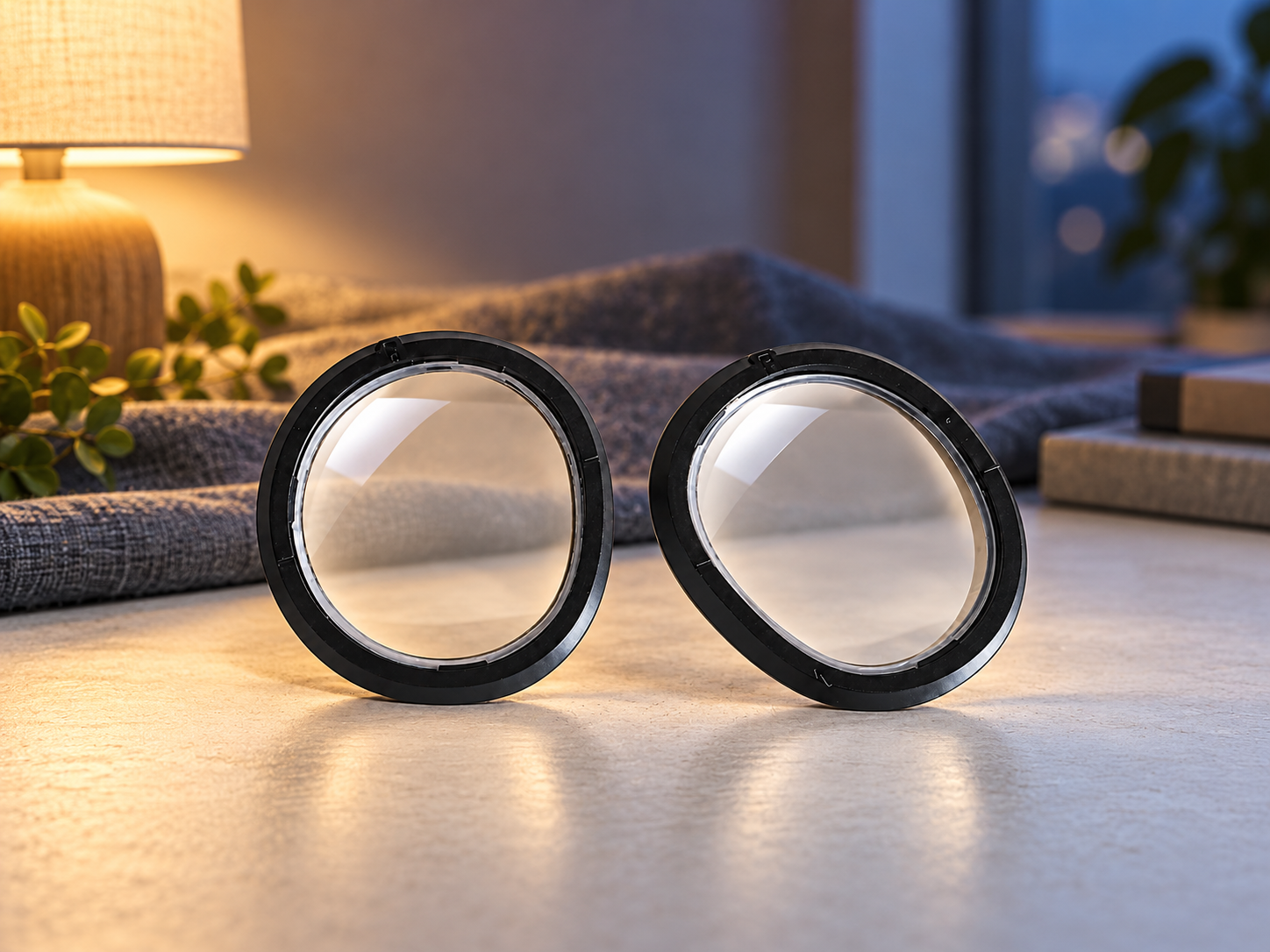
A prescription, an anti-reflective coating and a filter have different jobs
Prescription power addresses the correction specified for your eyes. An anti-reflective coating addresses reflections at lens surfaces. Blue-light filtering changes which parts of the incoming light reach you. A product can combine these features, but one does not stand in for the others.
The construction can differ too. ZEISS explains that filtering can be built into lens material through absorption or achieved through a selective reflective coating. Its explanation is useful for understanding the distinction; it does not identify the material or coating in another supplier’s inserts.
That is why “anti-glare included” and “add blue-light filter” can appear on the same order. Check what is already supplied before treating an optional charge as the only route to a finished lens. Our Lens Technology page explains the broader feature choices.
What the evidence can tell you about the extra cost
The 2023 Cochrane review examined 17 trials of blue-light-filtering spectacle lenses. It found that these lenses may offer no short-term advantage for computer-related eye strain compared with non-filtering lenses. Findings about sleep were uncertain, and the included trials did not establish effects on several other outcomes, including macular health and colour discrimination. The review searched studies through March 2022.
Those were spectacle-lens studies, not a clinical test of Fovevia inserts in your VR headset. They do not justify a promise that a paid filter will prevent eye disease, cure discomfort or improve sleep. They also do not tell you exactly how a particular insert will look.
If recurring discomfort is driving the purchase, discuss that problem with an eye-care professional. If the issue is unreadable text or a view that changes with headset position, use the Quest 3 blurry-text checks first. Buying another lens option is a poor way to find out whether fit, prescription or source content is the unresolved question.
Compare an adjustable display setting before choosing a lens treatment
Imagine using the same headset for a bright racing game in the afternoon and a film late in the evening. You may prefer the usual colours for one session and a warmer appearance for the other. An adjustable screen setting lets you make that choice session by session; a filter in an insert stays in the optical path while that insert is fitted.
If your headset offers Night Display or another colour-temperature setting, compare it with the normal display using familiar content. Keep brightness and the scene unchanged while judging the colour preference, then evaluate brightness separately. Use the controls available on your current software version rather than following an old menu screenshot.
A software preview cannot reproduce the transmission of an unidentified physical lens filter. It is useful for deciding whether you even want a warmer-looking image, not for certifying that an add-on has the same effect or a health benefit. If you like changing back to the normal display, that flexibility belongs in your buying decision.
Ask about colour appearance, not just a filter name
Colour is a recurring concern in Quest owners’ discussions of the optional coating. One person may dislike a colour shift that another barely notices. Neither report establishes what a different lens product will do.
Ask the supplier whether the exact option has a visible tint and whether it changes the appearance of familiar whites, skin tones or game colours. If filtering percentages are advertised, ask which wavelength range and measurement they refer to. A percentage without that context is difficult to compare with another product.
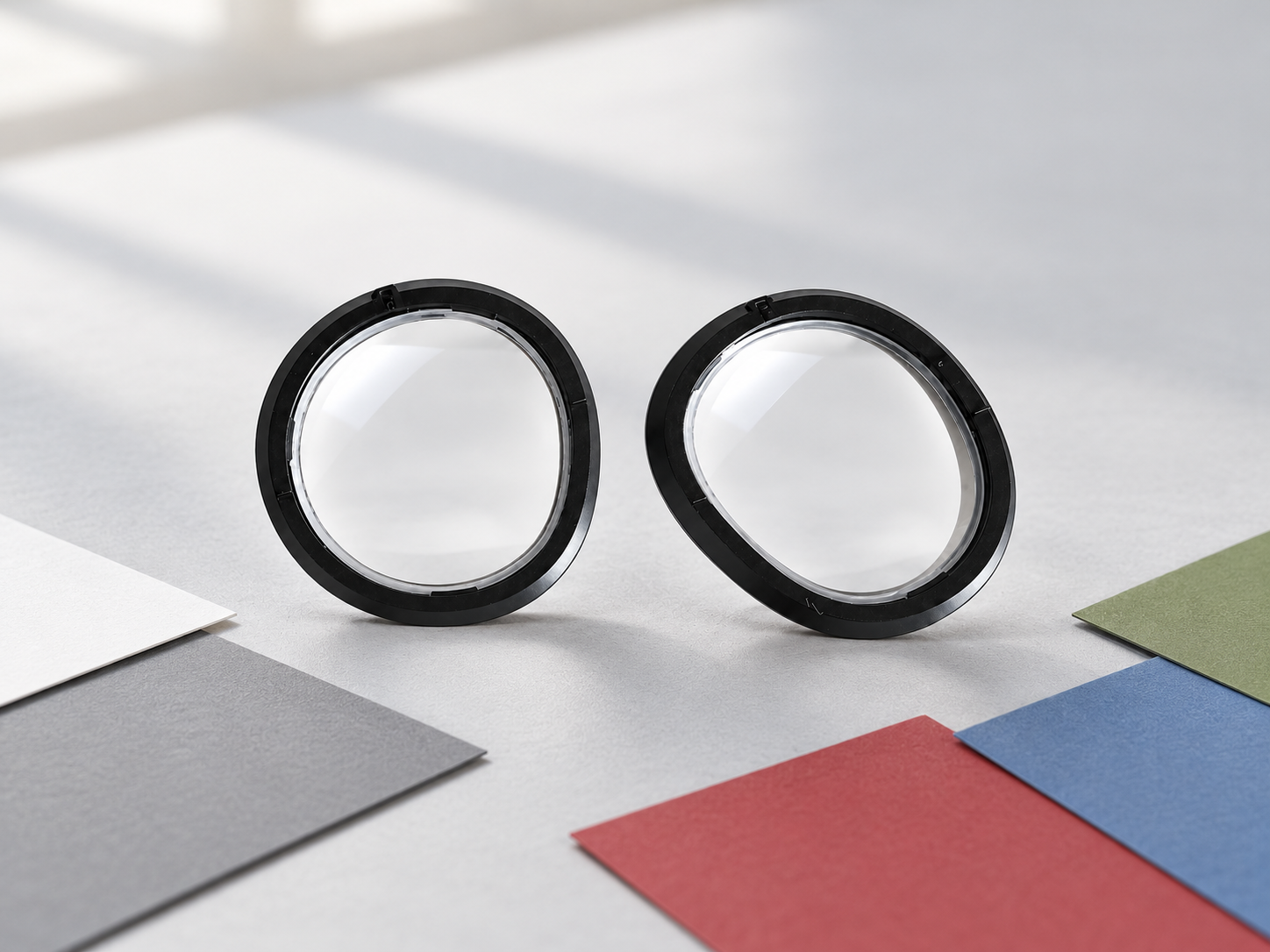
A blue or purple reflection in a product photograph does not, by itself, verify a transmission specification or a benefit. Room lighting, the coating and the camera all affect what a photograph shows. Request the lens information behind the claim instead of trying to test it from an online image.
Choose according to the reason you are considering it
| Your reason | A useful next step |
|---|---|
| You have no particular preference and want your first prescription pair | Prioritise the exact device, accepted prescription and included features. Leave the filter unselected unless you have a reason to add it. |
| You like changing the display warmth for different sessions | Try the headset’s available controls and decide how much you value switching back. |
| You already prefer a particular filtered spectacle lens | Identify that lens, then ask whether the proposed insert option is actually comparable. |
| You are hoping it will solve pain, persistent blur or another symptom | Resolve the symptom and correction question with appropriate professional advice before choosing an add-on. |
Check the option on the product you will actually use
On Fovevia’s Quest 3 insert listing, the blue-light filter is an optional $9.95 addition. Anti-glare and scratch-resistant coatings are already included. That is the stated feature and price distinction; it is not a measured promise about colour, comfort or sleep.
For an unanswered specification question, ask Fovevia Support about the exact product and option. A useful enquiry is whether the team can supply information about visible tint and spectral transmission for that option. Do not substitute another brand’s figures when those details have not been supplied.
Choose the extra feature when its known characteristics match a preference you can describe. If the reason is only a vague fear of screen light, settle the evidence question before adding a permanent lens treatment to the pair.