You can wear prescription glasses with Meta Quest 3 if the frame fits comfortably and the eyeglass lenses stay clear of the headset lenses. Prescription inserts let you use the headset without that spectacle frame inside it. The useful comparison is what each arrangement changes in your own sessions—not whether inserts are automatically an upgrade.
Meta lists glasses, contacts and prescription inserts as correction options for Quest 3. If your glasses already work well, keeping them can be a complete answer.
Start with the fit you already have
Put the headset on with the glasses you normally use. Notice whether the facial interface pushes the temples, whether the frame shifts as you turn your head, and whether taking the headset off pulls the glasses out of position. Those small interruptions are what an insert might remove from your routine.
Quest 3 has depth-adjustment buttons on its facial interface to provide more room. These are different from the lens-spacing wheel, and from the separate glasses spacer supplied with Quest 2 and Quest 3S. Follow the instructions for your actual facial interface rather than transferring advice from another headset.
Meta cautions against the two sets of lenses touching because either can be scratched. If space is crowded or contact seems possible, resolve the fit before continuing. Tightening the headset does not make contact safe, and a photograph of someone else’s smaller frame cannot establish that yours fits.
For occasional sessions, glasses that stay in place and leave adequate clearance may already meet your needs. There is little reason to add an accessory unless it solves something you actually encounter.
What changes with prescription inserts
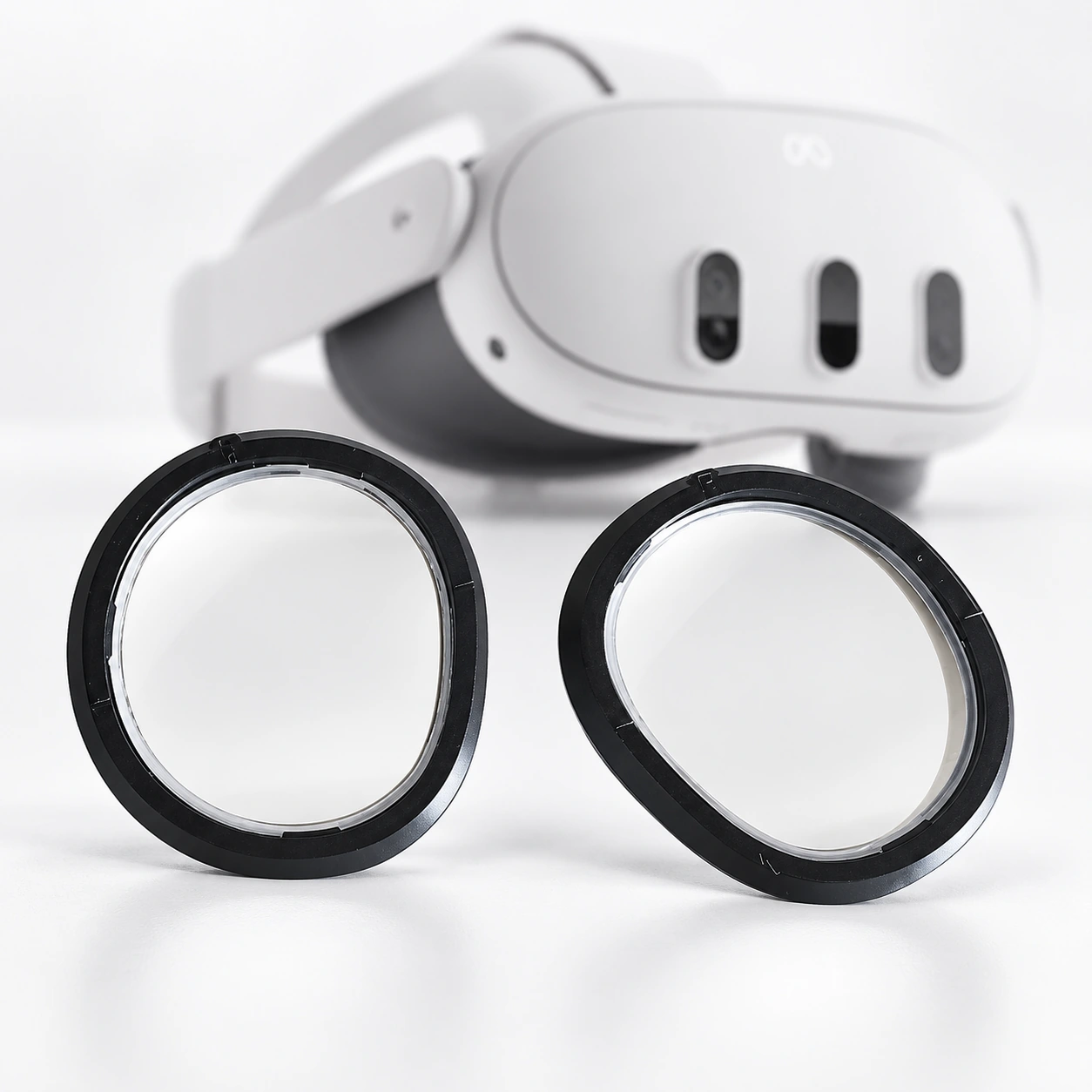
With the correct inserts fitted, you put your everyday glasses aside during VR. That removes the spectacle frame from the headset’s interior. It can simplify putting the headset on when that frame is the awkward part of the setup.
It also creates a separate pair of lenses to identify, handle and store. The headset still needs to sit comfortably, with enough room around the inserts. Meta’s insert guidance explains that Quest 3’s eye-relief adjustment can provide more room when inserts touch the face or eyelashes. An insert should not be treated as a guarantee of comfort for every face or facial interface.
Fovevia’s Quest 3 product is separate from its Quest 2/3S product. Check the complete headset name and whether you need prescription correction or plano lenses; plano lenses do not supply your prescription power.
Think through the next person’s turn
Sharing changes the comparison. Your prescription inserts should not stay in place simply because the next person is using the same headset. That person needs their own appropriate correction and a fresh fit check.
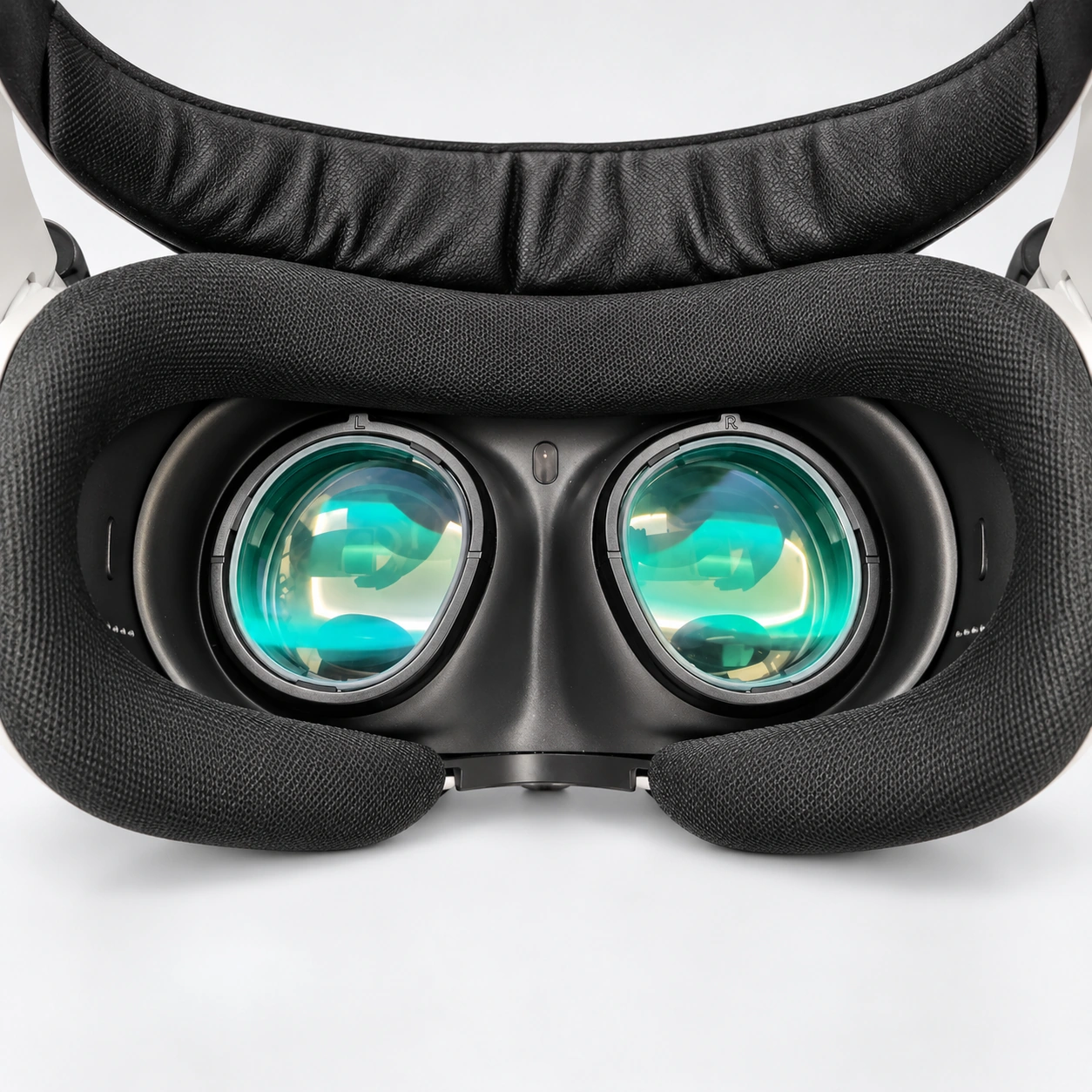
For Fovevia’s magnetic Quest 3 inserts, hold the lens-bearing frame and gently separate the magnetic attachment, keeping the clear lens in its frame. The lower mounting ring is a separate part; removing the insert does not mean taking the optical lens out. Follow the matching installation and care instructions and stop if a part will not release normally.
Decide where each pair will go before a handover. Keep removed inserts protected and identifiable, and recheck clearance when the next user switches to glasses or another correction route. Magnetic attachment makes a changeover possible; it does not remove the need to handle the lenses carefully.
Glasses may be the simpler choice for a household that shares often and already has acceptable frame fit. Dedicated inserts deserve consideration when one person repeatedly adjusts their spectacle frame before each session. Neither routine is universally easier—the handover is part of the choice.
Choose the routine that removes a real problem
| Your setup | A reasonable decision |
|---|---|
| Glasses sit normally and the lenses remain separated | Keep using them if the routine suits you. |
| The spectacle frame makes the headset awkward to put on | Consider model-specific inserts after checking their requirements and clearance. |
| Eyeglass and headset lenses may touch | Resolve the fit before further use; do not use contact as a fit test. |
| Several people share the headset | Include removal, storage and each person’s correction in the decision. |
If you are unsure which document to provide for an insert order, read why VR often uses a distance prescription and the Prescription Guide. If the remaining problem is soft text rather than an awkward spectacle frame, use the Quest 3 blurry-text checks before deciding that an insert purchase is the answer.
For an unresolved Fovevia model or assembly question, use Support. Further published help is available in Guides. Choose inserts when they address your setup; you do not need to replace glasses that already work for you.