If you already wear contact lenses comfortably, you may not need another accessory for your Quest. Meta lists contacts, glasses and prescription inserts as vision-correction options for Quest 3 and Quest 3S.
Dedicated inserts deserve a closer look when you only put contacts in for VR, or often want a short session after taking them out. Compare those moments before deciding that another accessory would be useful.
Start with when you already wear contacts
Think about your last few sessions. Were your contacts already in when you picked up the headset? Or did playing mean putting them in specifically, then dealing with them again afterwards?
For someone who wears contacts through the day and is happy with the view, continuing that arrangement can be a complete answer. Buying inserts would introduce a separate piece of equipment without necessarily removing a task they currently do for VR.
Someone who usually wears glasses and puts contacts in only for VR has a different starting point. The preparation belongs to that session, so an insert deserves comparison against those extra steps.
This is a comparison of routines you already know. If you are considering starting contacts or changing the type you wear, discuss that with your eye-care professional; the CDC’s contact-lens information explains why fitting and individual requirements matter.
Compare the work around a short VR session
Look at what happens before you put the headset on and after you take it off. Keep your usual contact-lens wear and care instructions in the comparison, even if the game itself lasts only a few minutes.
| Your starting point | Tasks to include in the comparison |
|---|---|
| Contacts are already part of your day | Your existing wear and care routine, plus fitting the headset for that session |
| You put contacts in specifically for VR | Putting them in and any subsequent removal or care required by your own instructions |
| You use dedicated prescription inserts | Checking the correct inserts and headset fit, plus removal and protected storage when needed |
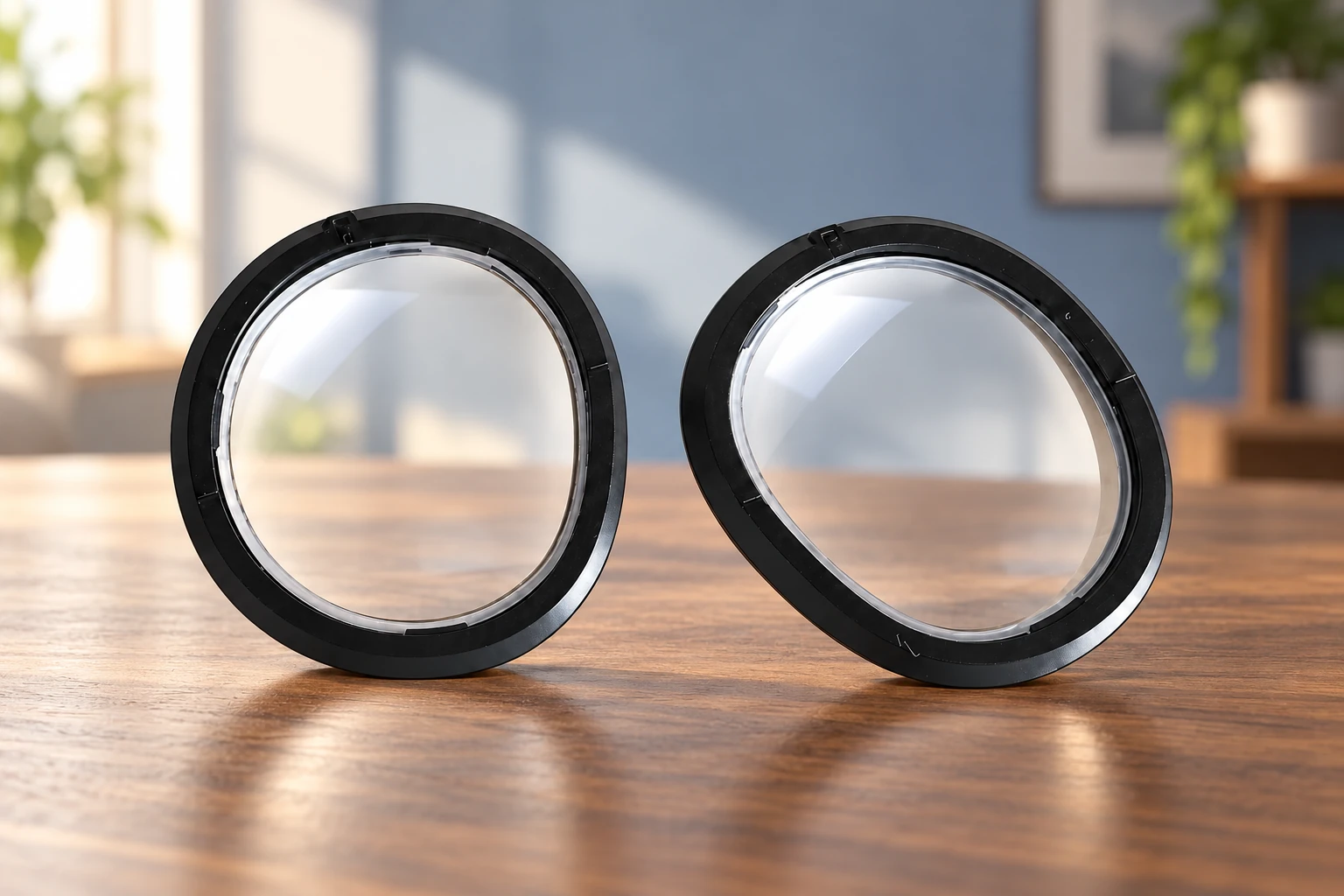
An insert becomes part of a particular headset setup. It is an item to look after, identify and store rather than something you wear away from the headset. Fovevia’s Quest inserts use magnetic attachment; handle the removable part by its frame and follow the matching installation and care instructions.
Decide where removed inserts will go before you need to put them down. A clean, dry protective container should be part of the arrangement. Magnetic attachment still leaves lens-bearing parts that need careful handling.
Plan for the times you are not wearing contacts
Decide which correction route you will use before fitting the headset on a day when you are not wearing contacts. Keep its parts and instructions ready, rather than improvising once the headset is on.
Dedicated inserts need to match that headset and your order requirements. If you prefer to keep using your ordinary glasses, our Quest 3 glasses-versus-inserts article looks at the frame-fit and handling questions for that route.
Sharing adds a handover to the routine. Before passing the headset, establish whose prescription inserts are fitted and how the next person normally corrects their vision. Treat a change of user or correction as a setup change. Do not assume the headset is ready simply because it was clear for the previous person.
Keep eye comfort separate from headset fit
Contact-lens discomfort and a headset pressing against your face need different attention. A different strap position will not establish whether your contacts are suitable for you, and an insert purchase does not explain an eye symptom.
The CDC advises contact-lens wearers to remove their lenses and contact an eye-care provider if they experience unusual irritation. Remove your contacts and call your eye doctor immediately if you develop pain, redness, light sensitivity or sudden blurred vision. Do not keep testing a new accessory as a way to work through those symptoms.
For the headset itself, use Meta’s fit instructions for your exact model. Quest 3 and Quest 3S have different controls. Inserts also need enough room with your actual facial interface; a supported headset model alone does not establish clearance for every face or third-party accessory.
Before buying inserts for Quest 3 or Quest 3S
Settle on the headset first, particularly if you are still trying devices and may return one. A retailer’s headset return arrangement and a custom lens order have separate conditions.
Under Fovevia’s current Returns & Refunds policy, prescription or personalized lenses cannot be returned voluntarily for a change of mind once production begins. This does not remove remedies for manufacturing errors, defects or other issues covered by the policy, or rights that cannot be excluded. Read the complete conditions before ordering rather than assuming a headset return also covers its accessories.
Once you know the model, use its matching product:
- Quest 3: View Quest 3 inserts.
- Quest 3S: View Quest 2/3S inserts.
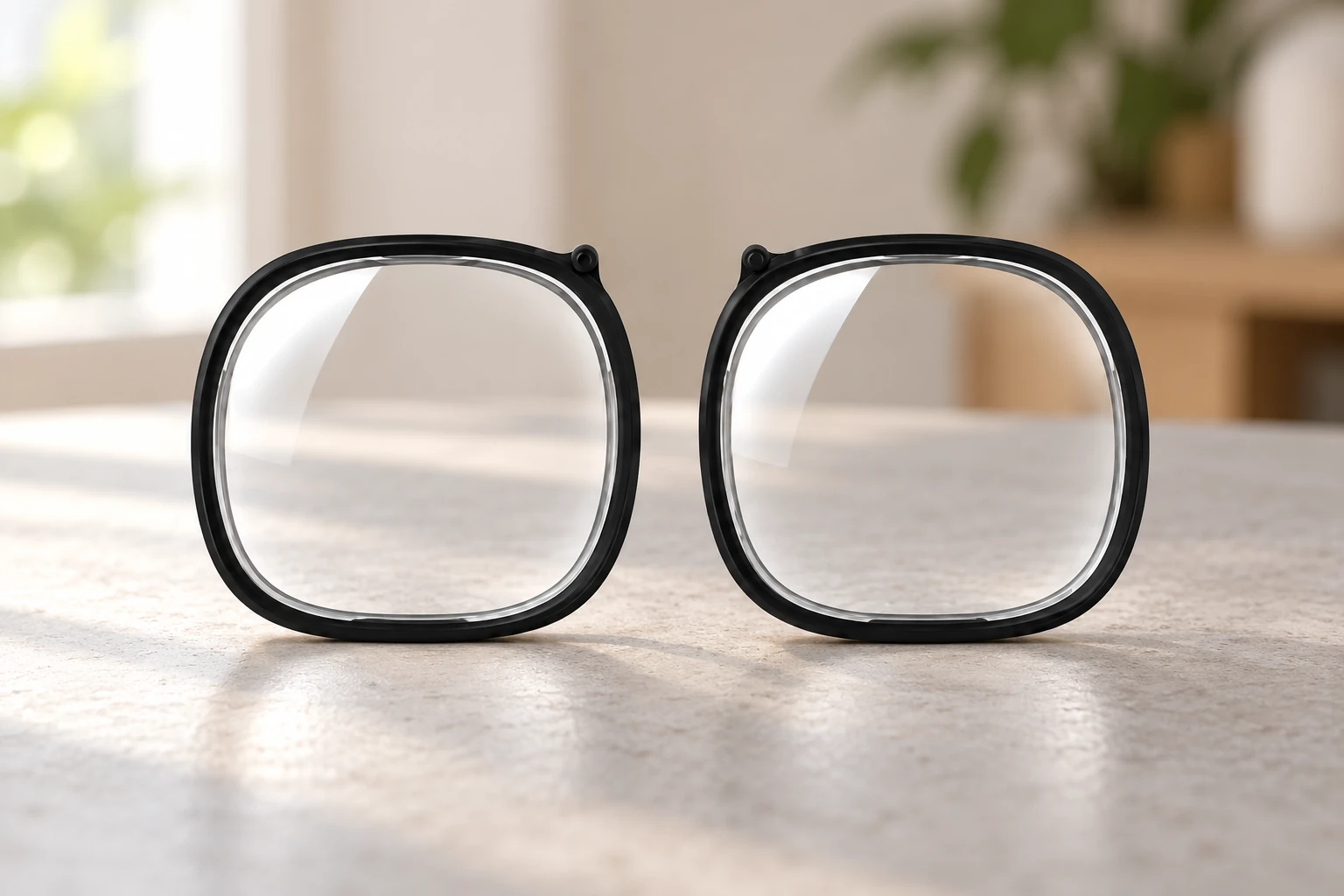
These products ask for an eyeglass prescription. If you only have a contact-lens record, read which prescription document an insert order needs before copying any numbers. The prescription guide covers the submission details.
Review the total for your actual selections and check production and shipping separately. Then return to the question that prompted the comparison: which repeated task would this purchase remove? If your current contacts already make the sessions you want straightforward, keeping that setup is a reasonable decision.