If a VR insert listing asks you to choose between anti-fog and oil-resistant coatings, start with the problem you actually want to reduce. Repeated condensation and fingerprints can both interrupt a session, but the options may involve different care routines. The better match is the one that addresses your nuisance and comes with maintenance you are willing to follow.
First identify the affected surface. If you are unsure whether the haze is condensation, residue or the displayed image, use the Quest 3 fogging checks before choosing a treatment. This comparison is for the buying decision once that distinction is clear.
Compare the options on the same insert listing
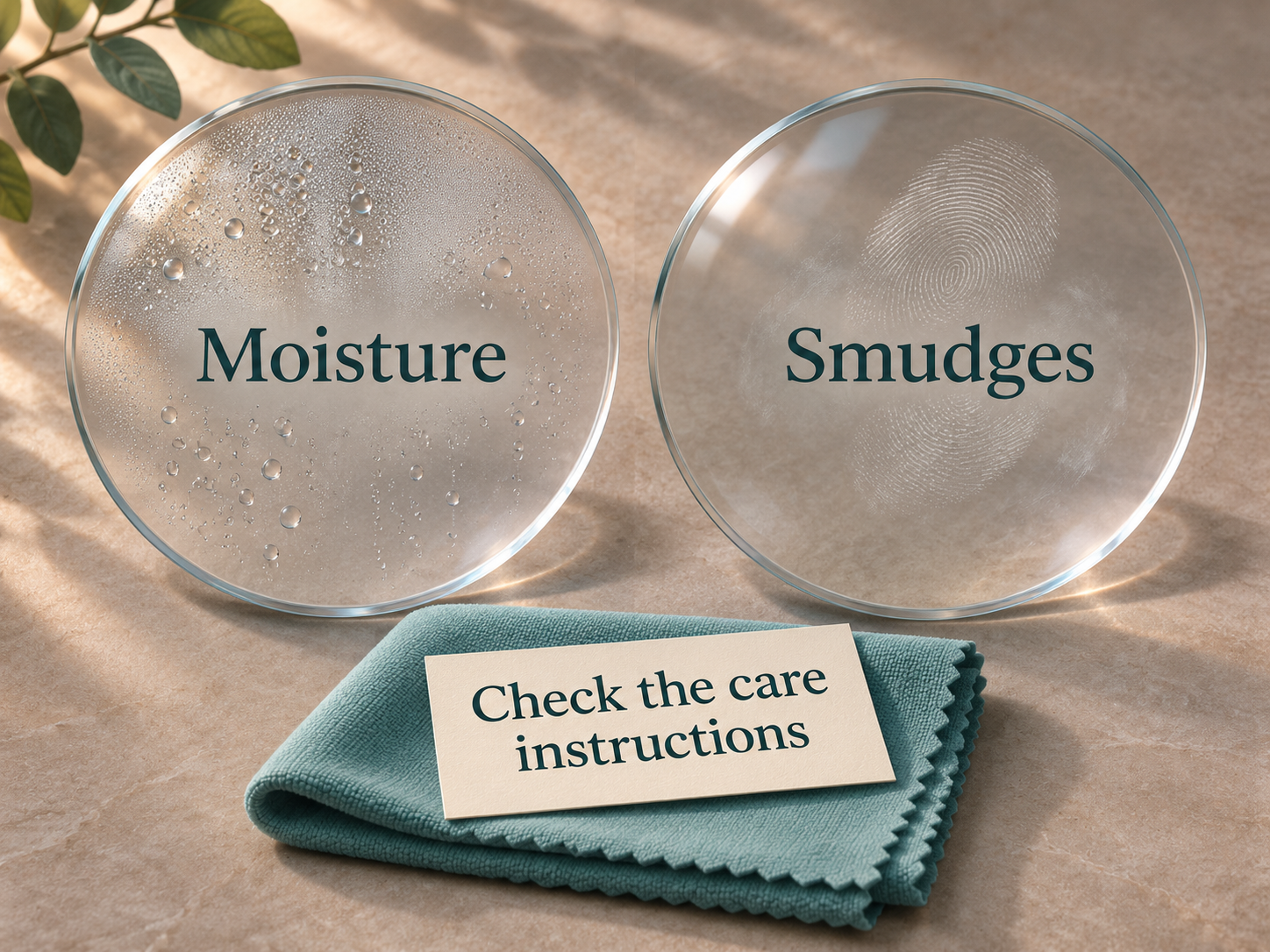
Zenni’s Quest 3 listing offers a useful, specific example: anti-fog or oil-resistant, with anti-reflective and scratch-resistant coatings listed for both options. Its oil-resistant description concerns fingerprints, smudges and water droplets; its anti-fog option addresses condensation. Those are Zenni’s stated features, rather than a specification for every supplier’s inserts.
| Zenni anti-fog option | Zenni oil-resistant option |
|---|---|
| Problem addressed Condensation on the lens | Problem addressed Fingerprints, smudges and water droplets |
| Included features Anti-reflective and scratch-resistant coatings | Included features Anti-reflective and scratch-resistant coatings |
| Care to check The separate activator cloth and reactivation instructions | Care to check The approved cleaning method for the supplied lenses |
| Confirm before ordering Whether the activator cloth is supplied and how to replace it | Confirm before ordering What treatment is included and which cleaning products are permitted |
Selecting oil resistance here does not mean giving up the listed anti-reflective coating. Neither choice makes a scratch-resistant lens scratch-proof. Compare the actual package before treating one label as the more complete lens.
Include the activator cloth in your decision
Zenni’s VR lens-care instructions describe reactivating its anti-fog coating with a dedicated cloth when the effect diminishes. The cloth must stay dry, must not be washed and should go back into its resealable pouch. That makes keeping and replacing a care item part of the purchase, alongside the inserts themselves.
If several people handle the headset, everyone who cleans the inserts needs to recognize which cloth is the activator and how it is stored. Ask about replacement availability before assuming an ordinary microfiber cloth performs the same job.
The surface restriction is equally important. Zenni’s VR product guidance explicitly limits that activator cloth to its inserts and says not to use it directly on Meta’s headset lenses. Care directions for removable inserts cannot automatically be transferred to the original optics or another brand’s coating. Use Installation & Care for the distinction between those surfaces.
Match the choice to a recurring problem
A shopper in this Quest upgrade discussion struggled to choose because neither fog nor fingerprints had been a significant problem in their previous setup. That is a reasonable buying question. It does not establish that either coating is unnecessary for everyone, or that one performs better.
Use your own experience to set the priority:
- If condensation repeatedly appears on the identified insert surface, consider the anti-fog option together with its activation routine. Confirm that routine before ordering.
- If fingerprints or oily smudges are the recurring interruption, the oil-resistant option addresses the problem named on Zenni’s listing. Resistance still leaves you responsible for appropriate cleaning.
- If neither is troublesome, compare what is already included and how much upkeep each option needs. There is no need to invent a problem to justify a more protective-sounding name.
If both occur, ask whether the exact product offers a combined treatment. Do not assume you can create one by adding an anti-fog wipe or spray to oil-resistant lenses. A forum suggestion is not permission to treat that coating.
Check a different supplier’s package separately
On Fovevia’s Quest 3 insert page, anti-glare and scratch-resistant coatings are listed as included features. Check the exact product description and ask about any additional treatment you want before ordering; Zenni’s two-option arrangement does not describe a Fovevia order.
Keep other choices separate too. A blue-light filter has a different purpose; the VR blue-light comparison covers that decision. If you need no correction, the Plano, film and storage-cover comparison helps identify the accessory before you compare its surface treatment.
Before paying, be able to name the exact insert, the treatment included, any required care item and its replacement route, the permitted cleaning method, and who handles a problem with the coating. A clear answer to those questions is more useful than choosing whichever label sounds strongest.